Saturday, 28 February 2015

Steady and transparent tax policies, effective tax legislations lead to investment

Government officials are required to resolve structural issues the Egyptian economy is facing as the Economic Summit is around the corner. In order for the Egyptian economy to modify and develop its structure, the government is called to enhance investment and stabilize tax policies.
According to the present tax structure, tax rates have soared beyond 40% due to a 5% increase in rate from 20% to 25%. Besides the increase in rate, companies and individuals are subject to an additional 5% surtax on those holding more than EGP 1m. Furthermore, the government has implemented a new 10% tax on dividends. Financial and investor professionals express their concern, believing that the present tax regime in Egypt does not attract investors therefore hindering the country’s investment sector. 

 Assessment of current Egyptian Tax Regime

An effective and efficient tax regime is made up of four parties including the tax policy, tax administration, the tax legislation as well as the taxpayer. Firstly, to improve the Egyptian tax regime, the government must create a comprehensive, long-term steady tax policy that will allow potential investors to make their investment choices founded on transparency and sureness.

It is also suggested that the Egyptian government prepares a five-year tax and financial policy in order to present at the Economic Summit. The government needs to make sure the five-year tax and financial policy will not alter depending on government officials or cabinet. It is crucial that the policy is and will remain stable and developed based on cost benefit analysis to successfully be integrated in to the economy.

Secondly, the government should rethink its tax legislation. A new modified income tax law needs to be issued, which rate and regulations are consistent with that of other countries internationally. The new income tax legislation needs to be outlined clearly and in detail. Additionally, Egypt needs to reevaluate its high tax rates in order to become more competitive and ultimately attract more investors. This is because other countries tax rates are generally lower.
International tax systems

All tax regimes are implemented to enhance three factors within an economy: economic, social and fiscal policies. The fiscal or financial policy aims to generate tax revenues. The economic policy aims to enhance and attract investment whereas the social policy targets to achieve justice and just income distribution in the society.

In regards to Egypt, at present the government is focusing on the fiscal aspect of its tax regime in order to resolve its government budget deficit quickly, although it should focus on revising its high rates and policies.

Companies and Individuals whose income surpasses EGP 1m are subject to an additional 5% tax
In the occasion where all investors were informed that the additional 5% tax would no longer be imposed after a three year period, as prescribed by law. However, after three years have gone by, the tax is still imposed. Therefore, investors realize that the government’s intention was to increase the rate of tax in an indirectly.

Value-added Tax Law

Egypt needs to introduce a new VAT legislation in order to increase its tax revenues. Experts hold the view that the Egyptian government needs to quickly introduce a new VAT law while allowing time to taxpayers to adjust and adapt to the new tax regime. If a transition period were not allowed, the new VAT legislation would not be implemented effectively. For instance, the introduction of a new VAT means that companies and businesses will need time to amend and alter their invoice systems and accounts.

Investors and Law modifications

Taking in to consideration the present financial environment in Egypt, investors feel the Egyptian economy is unstable because of the repetitive modifications made to the legislation. The legislation needs to be consistent and steady. For instance, the law articles concerning tax exemptions and reevaluation profit are not consistent.

At present, the legislation does not benefit Egypt companies concerning taxes. Additionally, a holding company is subject to double taxation when it holds less than 25% of capital and voting rights. This fact discourages potential investors from investing in the Egyptian market, taking their investments elsewhere.

Modified Tax Legislation

Experts believe new tax legislation needs to be implemented in Egypt, by revising two segments of the already established law. They believe the new law should unify law procedures as well as all the procedures involved in sales and income, to reduce the present procedures and evade tax mistakes from being made.   

Government’s Financial Measures

Egypt has been struggling with political and economic difficulties since the Revolution on 25 January. Consequently, the country’s economic volatility, low foreign investment inflow and less tourism has negatively influenced its financial state. Egypt has showed some progress since last June, in terms of its political and economic instability, which is mainly attributed to the new president who came in to office over the summer as well as the $12bn Arab aid it received.  Nonetheless, Egypt remains an instable market due to the terrorist attacks, which influence the economy by discouraging potential investments.

On a positive note, the economy seems to be heading on the right track after several positive changes. The government firstly made alterations within the energy industry and decreased the energy subsidy. EGP 100bn in total was used to subsidize oil products during the 2014-2015 financial years, which is EGP 30bn lower than 2013-2014. It is also anticipated that during 2015 the economy will benefit significantly from several projects, which will be undertaken such as the construction of more than 3000 kilometers of road networks, the Suez Canal axis as well as the land reclamation project.

Economic Growth

During 2015, the economy may strengthen marking a 4% growth rate under the condition the government continues to make economic, financial and tax alterations. Experts are hopeful the country’s GDP will rise to 5% during the current financial year. In order for an economy to prosper it must maintain its growth rate. The previous year’s GDP was marked at 2.2% I contrast to 2012-2013 GDP, which stood at 2.1%. Growth rates were marked at 6.8% and 5.7% during the first and second financial quarters in 2014-2015 respectively, which is a good indicator of growth.
Although Egypt has marked an increase in its GDP, it must make certain that it is equally distributed among all classes of society. In the past, its GDP reached 7% but sue to imbalance of distribution only a tiny section of society benefited.

International trends in growth rates

The question in hand is whether economic growth rates may be attained without taking into account the equal distribution of this growth. In occasions where increased economic growth rates were not distributed equally, only a tiny section of society benefited from the increased economic growth.
When an economy grows, unemployment rates decline therefore inflation also drops investment inflows surge up and obviously, the government’s budget deficits decrease. At present, the Egyptian government aims to decrease its state budget deficit. It hopes that within the following three years the budget deficit will drop to 8% of the country’s GDP.

Government Administrative Reforms

At present more than six million workers are engaged in the public sector of which the majority is temporarily employed. In time, all these employees will be kept on permanently, which is one of the administrative reforms the government intends to implement.  Secondly, altering and modifying the present wage system is also a matter the government needs to address to get rid of corruption, injustice and discrepancies within the public sector.

Furthermore, the administrative alterations made by the government will lead to less inflation regarding the managing and income costs. The government spends more than one fourth of its government spending. Although public employment has increased, quality services are not offered. Experts believe that the public sector may offer better quality of services with less number of employees. 

In addition, the Egyptian government also needs to consider creating a resourceful and proficient system for its employees. For instance, the state may set up early retirement funds, offering employees the opportunity to leave work earlier than intended and be compensated. The government may also promote the private sector so as more job opportunities open for workers and decrease the number of employees in the public sector.

Single-Window System

The government discussed a single-window system approach extensively and introduced the system successfully. The purpose of the system is to make the work of investors’ much easier by reduce both bureaucratic and administrative procedures. The system practiced at present is quite successful and advanced, similar to the system used in Dubai. Therefore, the process of setting up a company will no longer time consuming since everything will be done electronically but also the nearly 80 regulatory units an investor had to go through will no longer exist.

The new system will benefit the government largely since it is anticipated foreign investments will double. During the first quarter of the fiscal year, Egypt’s foreign investments reached $1.8bn, while during the second quarter investments marked an increase climbing to $2bn. Increased direct foreign investments indicate the economy is steadily recovering and on the right path. Furthermore, the introduction of the single-window system will enhance the country’s rankings within business indicator surveys, thus attracting even more businesses and investments.
Single-Window System vs. Corruption

By setting up a single-window system, both bribery and corruption will decrease significantly. Some consider that ineffectiveness and incompetence as a type of corruption which will also fade away. The single-window system carries many advantages, and the greatest of this is that human workers will be replaced by efficient machinery-thus; corruption, bribes, fraud and incompetence will all diminish.

Government Facilitates Procedures

One of the disadvantages of the Egyptian legislation is that procedures outlining both financial and commercial activities are not under one specific law, which does not help when enforcing the laws by creating uncertainty and confusion. The government should therefore unify all the laws relating to investment and add to that more incentives in order to attract more investors.
For or Against Exemptions

Experts do not agree on granting exemptions concerning tax to enhance investments. Additionally, exemptions create distortion within a tax regime. Furthermore, investors do not regard exemptions as an important reason to invest. Investors tend to seek legislative, tax regime, security and economic stability as the most important reasons to invest. 

Tuesday, 24 February 2015

Increased Demand, Launching New Products-Increase UAE Business Confidence and Activity


The United Arab Emirate (UAE) non-oil economy compensates for plunging oil prices. The nation’s Purchasing Manager Index (PMI) revealed that despite the drop in oil prices, its non-oil sector continues to grow and strengthen. The PMI is an amalgamated pointer of UAE’s non-oil sector based on information and statistics taken from about 400 private-owned companies throughout the UAE. 
The UAE’s PMI reached 59.1 in January, indicating an increase of 0.7. The index was also the highest it has reached over the last three months.

The fact the UAE’s non-oil based sector showed a boost in activity from the beginning of 2015 is incredibly positive. However, the UAE expects that the PMI will fall within the year due to decreasing oil prices and less demand in exports, especially from markets within the Gulf area.

Nonetheless, the PMI in January marked a boost in UAE’s non-oil private-owned sector concerning production. The boost was attributed to higher demand, new products that were brought into the market and increase in new work. Consequently, income numbers marked an increase while the rate of growth increased slightly in comparison to the previous month. Furthermore, the price of input materials and purchasing price rose steadily.
The increase in the rate of output also contributed to the strengthening of UAE’s private non-oil sector. Just under 40% of panelists revealed a production growth in contrast to the previous month. New orders increased during January, which has steadily been increasing since August 2009.

UAE’s non-oil based sector has grown stronger due to increasing new orders from international as well as domestic markets. The excess of work added pressure concerning the UAE’s ability to meet rising demand. Demand has been increasing for the last nine months.

In order to meet continuous growth of demand, companies sought to employ more workers over January, resembling the same trend, which was noticed in the beginning of 2012. Higher production and launching of new products, led companies to hire new employees, therefore increasing the employment rate.

The PMI carried out in January 2015 reveals the UAE’s private non-oil sector strength. The sector still grows although oil prices are plunging. The UAE is confident that the private non-oil sector will remain strong throughout 2015, contributing a 4.3% growth in GDP and more precisely a 4.7% growth in GDP in Dubai.

In an effort to maintain production growth, non-oil private companies increased their purchasing activity during January 2015.  Concerning expenses and prices, input and purchasing prices still marked a steady increase. The increase in prices overall is thought to be due to higher demand-which led to the prices of raw materials to rise. Furthermore, income and salaries also rose slightly. 

Wednesday, 18 February 2015

The UAE confirms that Gulf States are contemplating on value-added tax (VAT)

The Gulf region is currently conversing on implementing VAT on regions, which are rich in oil. According to sources, a meeting will be held in order to further discuss the matter later on during this month.

The six states part of the Gulf Cooperation Council (GCC) has been considering implementing VAT ever since 2007 in order to increase profits. All discussions and negotiations concerning the implementation of VAT have been conducted in the presence of all six Gulf States in order to prevent one state from excluded from competition.

Due to the plunging of oil prices, the Gulf nations are considering the introduction of VAT now more than ever before. This is because it is anticipated the six Gulf States will mark a budget deficit during the 2015 financial year and are not willing to cut off state spending on neither infrastructure nor social expenditure, which aim to enhance their economic status and as such improve the lives and lifestyle of the people.

Although the GCC has held several meetings, nothing has been decided yet. The GCC has arranged another meeting during February in order to further discuss the matter. The GCC is contemplating on introducing VAT on specific services and goods. No decision has been officially made, as some states do not want VAT to be imposed on food products whereas others do not agree on imposing VAT on healthcare.

The six countries part of the GCC includes the UAE, Qatar, Kuwait, Saudi Arabia, Oman and Bahrain. The GCC has suggested setting the VAT rate between 3%-5%, although it has not been made official.


IMF has long supported the idea of GCC implementing a levy in order to make sure governments will receive profits no matter the instability of oil prices. Furthermore, the UAE will possibly introduce a corporate tax, but again nothing has been made concrete. 

Wednesday, 11 February 2015

Non-oil sector on track in UAE

According to a new survey conducted in the UAE, its private non-oil sector is continuing to experience growth, in spite of plunging oil prices. However, it is anticipated business activity may drop or slow down during 2015.

According to January’s Purchasing Managers Index (PMI), international boost of orders attributed to increase in production output and employment rate. The PMI reached 59.3 in January, marking an increase of 0.7 from December’s PMI. The PMI calculates production output, spare capacity, prices and orders in order to represent the UAE’s non-oil based growth. The growth of the UAE’s non-oil sector is mainly attributed to the launching of new products, steady market and increase in sales.
The cost of production rose more sharply than the cost of finished products, since the increase in expenses (income and expenses of raw materials) hit the private non-oil based companies.
Increase in production and input expenses has not yet led to major increases in the cost of finished goods. On the contrary, decreasing commodity costs will possibly decrease inflationary issues and pressures. The UAE’s inflation rate is almost as high as it was in 2009 due to increasing housing and utility expenses.

During the previous month the IMF amended its forecasts concerning UAE’s economic growth reducing anticipated 2015 economic growth from 4.5% to 3.5%. The IMF expects that plunging oil prices will reduce UAE’s exports and consumers’ confidence.
However, Abu Dhabi’s non-oil based sector is anticipated to increase 5.5% during 2015. The percentage rate growth is significantly higher than its oil based sector, whereby the IMF anticipates will increase by 0.5%.

The significant decrease of oil price from US$110 per barrel during the last months of 2014 to $50 per barrel will inevitably influence oil dependent countries throughout the GCC.
UAE’s government spending and 2015 Budget is anticipated will remain steady due to its large government foreign asset and currency reserve wealth funds. The UAE’s reserves amount to approximately 400% GDP, in comparison to its expected 2015 financial deficit of 3.7% GDP.
Plunging oil prices will possibly influence the demand for imports from the UAE’s trade partners, which inevitably will negatively influence the country’s growth rate.

Nonetheless, the fact that business activity boosted in the beginning of 2015 is promising, although it is anticipated business activity will slow down as the year unfolds due to decreased oil prices and lower demand from significant export markets throughout the Gulf.

Generally, the UAE’s decreased growth concerning its oil-based sector will be counterbalanced by Dubai’s significant growth in non-oil based sectors. In spite of this, inflows to the emirate will be significantly influenced due to plunging oil prices. During 2015, business activity is anticipated will slow down but no alterations in consumption behavior is projected.


According to Saudi Arabia’s PMI, its figure remained constant at 57.8, revealing economic growth due to increased orders. Egypt’s January PMI dropped to 49.3, revealing output slowed down. This is the fifth time Egypt’s PMI figure dropped lower than 50 since Hosni Mubarak was removed in 2011. 

Saturday, 31 January 2015

Ras Al Khaimah Free Trade Zone awarded ten excellent companies


Ras Al Khaimah Free Trade Zone awarded ten excellent companies at the First Annual Business Excellence Awards

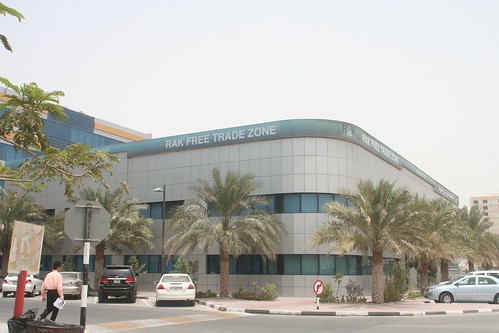
Ras Al Khaimah Free Trade Zone (RAK FTZ) awarded ten companies during the first Business Excellence Awards Programme for their exhibiting excellence in their Business activities, showing the most growth as well as innovation and corporate social responsibility amongst other business-orientated features. RAK FTZ is home to more than 8000 companies involved in investment business.  More than 120 were included in the free zone’s awards. A judge committee from the International Performance Excellence (IPE) selected the winners.

His Highness Sheikh Ahmad Bin Saqr Al Qasimi, Chairman of RAK FTZ, congratulated the winning businesses for their outstanding business performances and for their contribution to the economic development of the free zone as well as the business sector in which they are involved. The free zone’s government believes that commemorating the most successful business activity and excellence does not only accentuate the awarded businesses but also the free zone itself for providing them with benefits so as to run their businesses more effectively. Some benefits include A-class facilities, top-notch quality business set-up support and lower costs. RAK FTZ is looking forward to helping even more corporations set up their businesses in RAK FTZ during the following years.

The winners of RAK FTZ’s Business Excellence Awards Programme included:

J & R Business Consultancy-which provides business consultancy services as well as training. The company was awarded the ‘Best Small to Medium Size Business Award’ due to its outstanding provision of services.
Burkert-Contromatic AG International Middle East-was awarded the ‘Best Technology Award’ accentuating their efforts for producing new and innovative products and services linked to technology and promoting them into the market.

Eurocap-an organisation that manufactures lids and caps for cosmetic products including perfumes as well as plastic packaging products was awarded the ‘Best Contributor to Ras Al Khaimah Development’ award. The award highlights the important role the business has played in the economic and social progression of the emirate.
Biri Industries-was awarded the ‘Fastest Growing Company’ award, highlighting the immense growth it has shown since its launching. Biri Industries manufactures and supplies hoses and pipes for agriculture, domestic use, oil and gas as well as marine and for other industrial linked sectors.
Utico-was awarded the ‘Best Corporate Social Responsibility’ award for its beneficial business activities towards both the environment and society. The company is the largest private service company throughout the Middle East.

Milly Pack-was awarded the ‘Best Start-Up’ award which highlights the efforts of a corporation that has been running for under three years and has shown innovative business practices. The organisation is involved the packaging and packing of material industry.

RAK FTZ also awarded companies for their successful accomplishments and support towards the emirate and free zone. Several of the companies are outlined below.

Both Zaher Kayyali Trading and TCA International were awarded with the ‘Referral Champion of the Year Award’ for contributing the most referral to RAK FTZ. 

Both Intertrad and RamJet Aviation Support were awarded with the ‘Pioneer Award’ honouring them for conducting their business activities the longest in the free zone. The first company is involved in the import and export business of wool, tiles, synthetic rubber as well as spices, tea and other food products. The latter is involved in the aviation services sector and has run business activities in RAK FTZ since 2007.


The judging committee were part of the International Performance Excellence (IPE) company, a private company that supports business quality throughout the world. Eithad Airways, National Bank of Abu Dhabi, Abu DhabiEducation Council, Abu Dhabi Police as well as the UAE Ministry of Health are several of the IPE’s many clients. 

Friday, 30 January 2015

Dubai Cautions over US dollar

Dubai is apprehensive about the consequences the strengthening of the US Dollar will have on its economy. According to DubaiEconomic Council (DEC) a strengthening US Dollar will negatively influence loans, exports and debts. Due to Dubai being a diversified economy, it will be influenced more by the US dollar than plunging oil prices. The DEC is directly involved in the economic decision procedures of Dubai’s government.

Attention was initially focused on the international drop of oil prices, which fell more than 50% since June 2014.
Last Wednesday, the US Dollar Index traded at 92.7640. The highest it has traded recently is 93.046. Just before oil prices began to decrease during last may, the US Dollar Index was traded at the low index of 79.5.

if the value of US Dollar soars, Dubai’s cost of servicing debt will also simultaneously increase. This will also affect other areas of Dubai’s economy. For instance, the demand for UAE manufactures goods and US re-exports may drop due to the fact their price will rise, therefore will be more expensive for non-US markets to purchase. Plunging oil prices will also influence exports since oil-based economies such as Saudi Arabia, Qatar, Oman and Iran’s income will plunge, which are the UAE’s major export partners.

What ’s more, due to the higher interest rate of the US Dollar, cost of borrowing will also increase. The US economy is recovering and recoiling at a faster rate than was anticipated, marking an average groeth rate of 4.8% during the last two financial quarters. Its growth rate and overall economic performance is the strongest it has been during the last ten years. A recoiling US economy could possibly lead to an increase in interest rate conducted by the Federal Reserve. At present, the interest rate is marked at the low percentage of 0.25. in the occasion interest rate increases in the US, the UAE’s interest rate will most probably follow, which is anticipated will not significantly influence the latter because its rate is currently very low.


Although Dubai is cautious, its government does not believe the increase in US Dollar will threaten Dubai’s economy. Decreased oil prices will probably result in increased production levels, and the increased US Dollar will lead to a decline in costs concerning re-exports to non-US countries. Last Thursday, Global benchmark Brent Crude was sold at $48.41 per barrel. When compared to June 2014, the prices of oil more than halved, marking a 57.9% plunge. 

Wednesday, 28 January 2015

UAE private sector is on a climb

Based on the United Arab Emirates (UAE) Purchasing Manager Index (PMI) the country’s private sector is successfully maintaining its progress even though the price of oil has soared downwards during the last few months.

During the previous month, the PMI results revealed that the UAE’s non-oil based private sector grew in terms of business activity.  The PMI’s data comprises of an amalgamated index on the UAE’s non-oil based economy, which was calculated based on the data gathered from about 400 privately owned companies throughout the emirates.

During December 2014, production growth increased in comparison to the previous month, to a level, which up until now has never been reached before. The production growth was strengthened by the boost in new orders. Simultaneously, job openings continuously opened and workers were employed, marking an increase in employment rate.

Throughout December, the PMI index was well above normal, reaching 58.4, which when compared to November 2014 calculation at 58.3%, not much had changed. However, the slight increase still reveals that the UAE’s private non-oil based sector is steadily improving and growing.
Ever since February 2010, the UAE’s non-oil based private sector production has been steadily growing. The continuous growth was maintained all through December as well, marking a significant increase, which was attributed to the fact new business inflow from the domestic and international markets.

During the last four months, export orders continuously increased, reaching a climax in December. The increase in export orders may possibly be attributed to the fact that demand on an international level has increased because the UAE has succeeded in drawing in new international customers as well as maintaining its healthy market. The PMI data also revealed that consumption soared drastically during December 2014.

According to expert financial advisors, it is anticipated that the decreased oil prices will influence the UAE within 2015, but for the time being demand is maintained at a satisfactory level. The fact that orders and production output are on the increase is a reassuring and supporting sign.
Due to growth in output production and new increased orders, UAE companies hired additional workers to meet demand. In spite of the fact that growth has marked a tiny fall when compared to December, patrol statistics have revealed a sharp increase, which is quite impressive when comparing to past data.

UAE private sector companies have been facing pressure in terms of cost and expenses. Generally, inflation concerning input goods prices rose during December, which was accompanied by a soaring increase in purchasing costs and low-income growth. On the bright side, output costs declined in December due to the declining rate of inflation in contrast to December. 
UAE private sector companies anticipate that during the future their orders, purchases and stocks will mark further increases. The most recent PMI data reveal that the UAE’s non-oil based private sector is strong, showing that declining oil prices will not influence the business operations of the non-oil sector. 

Experts insist that the UAE is completely capable of facing any problems that may arise due to the plunging of oil prices because of its diverse economy and strong buffers. The UAE shines amongst the other GCC countries as it has the potential and tools to manage its economy if prices of oil continue to surge downwards.

The continuous efforts of the UAE government to develop its non-oil sectors has paid off since in 2013 the non-oil sector contributed 61.1% of the nation’s total GDP and continues to grow fundamentally. In 2000, the non-oil sector contributed to 44.7% of the UAE’s total GDP.

The UAE does not solely depend on oil-based businesses for revenues as its non-oil based economy has marked continuous growth over the years, which is especially evident in its increased inflow of investments as well as a significant growth in non-oil related goods and services export activity.